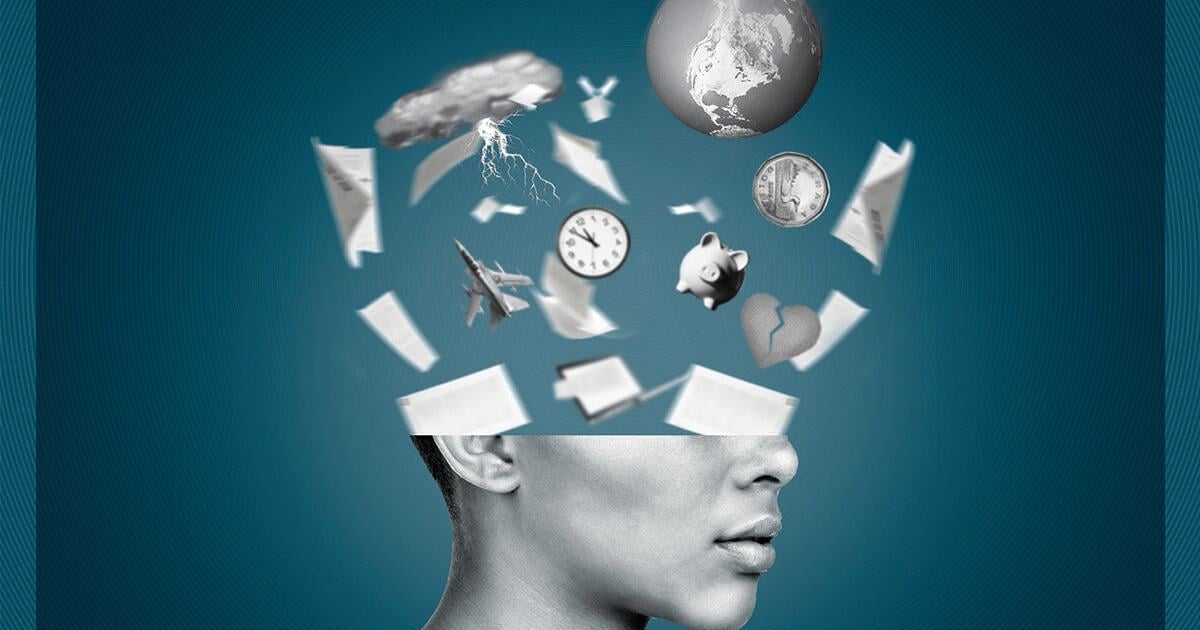
During times of stress and uncertainty, it can feel like we’re adrift on a roiling sea. It’s a sense of not being in control of what will happen next, of which wave will lap over us or pull us under.
We are living through difficult times: unaffordable housing, high-stress or precarious jobs, electronic devices demanding our attention even more than our loved ones, the dark cloud of climate change looming above us, and global upheaval.
Many Torontonians are struggling. A new study by Thrive Toronto says 52 per cent of Torontonians reported having good mental health in 2022, down from 73 per cent in 2015, while 31 per cent said their mental health has diminished since before the pandemic. In a recent Centre for Addiction and Mental Health study, the number of people reporting moderate to serious psychological distress more than doubled — from 17.7 per cent in 2019 to 36.7 per cent in 2025.
“I think we are living in scary times.” said Dr. Kwame McKenzie, CEO of the Wellesley Institute, a professor at the University of Toronto’s department of psychiatry and co-author of the study. “It did accelerate during the pandemic, but we’ve been on this road of deteriorating mental health for a decade.”
Thrive Toronto is a coalition that brings together partners from municipal government, community organizations, health care and public health. It used data from Statistics Canada, CAMH, Ontario Health and the Toronto Mental Health and Addictions Access Point to assess the mental health of Torontonians.
In reflecting upon what people are feeling, Dr. Suze Berkhout, an associate professor at the University of Toronto’s department of psychiatry and a clinician-investigator in the University Health Network’s Centre for Mental Health, referenced the social policy concept of “wicked problems.”
Wicked problems, in a nutshell, are complex, seemingly insurmountable challenges driven by social, global and policy forces with solutions that can work against each other; for example, clearing a massive plot of valuable land to build housing, while also causing ecological devastation.
But they can also manifest in our daily lives — for example, a single mom working three jobs to put food on the table and pay for daycare, while also finding she’s unable to spend enough time with her children.
“That sort of fear and uncertainty and precarity is going to be exacerbated by political, economic and environmental crises that certainly seem like they are exploding around us,” Berkhout said.
These feelings can make us feel trapped, alienated, aimless and anxious, even when it seems like things are going OK.
“Even when there are actually all these great things that might be going on (in your life), it can all feel very overwhelming and pressing,” Berkhout said.
“How do you pull levers in a system that is so far beyond what’s within your control?”
Table of Contents
ToggleHow Torontonians are struggling
A recent study by Thrive Toronto says 52 per cent of people in Toronto reported having good mental health, down from 73 per cent in 2015.
14%
of Torontonians were classified as moderately or severely food insecure.
32%
The share of of the population that reported finding it “difficult” or “very difficult” for their household to meet its financial needs in terms of transportation, housing, food, clothing and other necessary expenses.
28%
of Torontonians reported high levels of work stress.
15%
of Torontonians reported they felt they had low job security.
22%
reported a high level of life stress.
22%
reported lacking sufficient support from others to cope with their biggest source of daily stress.
Source: Thrive Toronto
Toronto Star graphic
How social media is harming kids
It may come as no surprise that the report linked certain stressors to lower mental health. Challenging working conditions, financial difficulties and time pressures were among top stressors.
Certain segments of the population are affected more than others. People who reported adverse childhood experiences, had experienced discrimination, hadn’t graduated high school or were members of the LBGTQ community all reported higher levels of mental distress, with all groups falling well below the Toronto average among those who reported high perceived mental health.
Youth, by far, reported the most concerning results. Only 41 per cent of youth ages 18-24 reported high perceived mental health. That number drops to 33 per cent for youth under 18 — the lowest of all demographics.
“Kids are not doing well at all … The main problem with the kids struggling is we don’t have a good strategy for helping them,” McKenzie said.
It’s more difficult to be a kid these days, McKenzie said, which is exacerbated by social media and the pressure to present a certain image of themselves online.
“When I was a kid I was just a kid. Now the questions are, are you trendy? Are you buff? Kids are being asked to do all sorts of things and grow up quicker than ever before,” he said.
One of the most notable findings was that 46 per cent of young people reported feeling depressed about the future because of climate change.
McKenzie pointed to what some officials in other jurisdictions are doing; he said in Australia, if a youth tells a health professional they’re worried about climate change, doctors are advised to encourage youth to get involved in doing something about it. In the United Kingdom, they appointed a minister of loneliness to combat widespread social isolation.
While youth are a particularly vulnerable group, McKenzie emphasized we need a multi-pronged approach to help all individuals who are struggling.
“We should be able to do more than one thing and we shouldn’t leave whole groups behind.”
Acting before a crisis point
When it comes to kids, McKenzie said we need a proactive system that focuses more on helping youth flourish, well before their mental health reaches a crisis point.
He pointed to activities that are proven to lead to better outcomes: local clubs, healthy evening activities, volunteering and outside exercise.
“All of those things that people used to do …need to be brought back,” he said.
But he added that we also need greater access to community mental health services, more affordable housing, and more support for families who are experiencing food insecurity or other financial pressures.
The key, McKenzie says, is to get people to a healthy place before they reach that point of desperation.
“I would argue that if the government spent as much time trying to decrease the number of people who need services, they would probably do better. Because at the moment, service need is outstripping service provision.”
The need for social connection
A key human need in feeling “OK” is social connection, and not the kind we find on social media or texting, said Steve Joordens, a psychologist and professor at U of T who has studied conscious and unconscious influences.
When people are hungry, they know they need to eat, or when they’re thirsty, they know they need to drink. But the need for connection and belonging is more unconscious, but just as crucial for health and happiness, Joordens said.
‘When people don’t quite understand this feeling … it’s telling them they need social connection,” Joordens said.
Ideally, each person would have three or four people in their life who deeply care about them, who they know would be there during difficult times.
“Those people become our insulators to stress,” Joordens said. “And so many people have lost that social connection.”
Poverty, housing, health care, education and the environment are massive issues that need massive responses. And thinking about them can be overwhelming.
On an individual level, sometimes we need to look critically at our frame of reference and recognize that we can’t solve everything on our own, Berkhout said.
“Sometimes that means recognizing I’m doing the best that I can in a set of circumstances that are being governed by these wicked problems,” Berkhout said. “You sort of pause, to recognize this is hard, and that I am doing what I can in this moment.”
Picture yourself on a sailboat on that roiling sea. You may not know where you’re going, or even where you want to go. You may be unsure of which direction the winds are blowing.
But what you really need is an anchor. That anchor can be your family, your friends, your partner, your career or your aspirations.
“How is it that you can create that sense of yourself, that sort of anchor?” Berkhout said. “What is it in this moment that I can kind of hang on to that anchors me? That’s the same answer to the bigger questions.”
link