KLEIN: Negative politics is eroding trust, confidence, mental health
Article content
I’ve been watching the political scene lately and feel it is time to speak plainly about what’s happening.
Advertisement 2

Article content
Article content
Recommended Videos
Article content
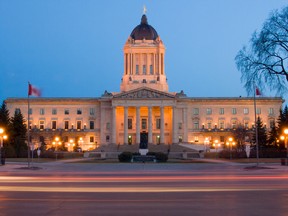
Every election season, the tone shifts. Instead of focusing on real plans to solve our problems, leaders often resort to harsh words and personal attacks. This isn’t limited to one party or level of government — it’s seen at the federal level and in local races, including the recent PC Party of Manitoba leadership race. The negativity we witness is more than just noise, it is chipping away at our confidence in the future.
At the federal level, politicians on all sides are engaging in hostile rhetoric. Rather than debating policies or offering solutions, many choose to attack their opponents with unverified claims and personal insults. A recent Pew Research Centre survey found that this kind of negative political discourse can lower trust in institutions and make citizens less optimistic about our ability to tackle tough issues. The effect is clear: hostility in politics saps the energy we need to move forward.
Advertisement 3
Article content
Closer to home, the PC Party of Manitoba leadership race has devolved into a contest of personal attacks rather than a debate over policies and future plans. Some candidates have focused on discrediting their rivals with mudslinging instead of discussing how to improve health care, education, or our economy. This approach leaves voters wondering if any candidate can rise above the negativity to provide real leadership.
When the negativity starts, candidates should immediately say, “I’m not here to get into the mud, I’m here to talk about solutions to the issues we face.” That straightforward statement would signal a commitment to looking past petty squabbles and focusing on the problems that matter. It is a reminder that leadership is about providing answers, not indulging in blame games. I have long wished that our political leaders would embrace this simple truth and steer the conversation back to the challenges we must solve together.

The Winnipeg Sun’s Daily Headline News
Article content
Advertisement 4
Article content
When bad news comes our way, we deserve a clear explanation of what happened — and what will be done next. Leaders who openly address setbacks and then offer a plan for improvement can build trust. Research published in the Journal of Communication shows that when leaders are transparent about problems and outline steps to address them, public confidence rises. We shouldn’t be sugarcoating reality but facing it head-on and working to make things better.
A good example of how our focus on negativity can skew perceptions is the media coverage following the Delta plane incident in Toronto. Many outlets led with the number of injuries, omitting the fact that everyone survived. Imagine if the headline had read, “Plane Crash in Toronto, Everyone Lives! See the difference.” Such an approach would not ignore the seriousness of the event, but it would offer a more balanced perspective.
Advertisement 5
Article content
Instead, the emphasis on the worst aspects reinforced a climate of fear and uncertainty. This method of reporting does not serve the public interest — it only deepens our collective anxiety.
I am not immune to this tendency either. When I first hear of a setback or a crisis, my instinct is often to focus on what went wrong. I have noticed that dwelling on the negative does little to improve a situation. In my work, I am trying to shift that focus to include not only what has happened but also what can be done about it. I believe that if more of us — politicians, journalists, and citizens alike — commit to highlighting solutions rather than merely reporting problems, we could begin to rebuild our confidence in the future.
Working in the newspaper business is a challenge in itself. Every day, my team and I face pressures from declining circulation, the struggle to secure local advertising, and the constant need to adapt to a fast-changing media landscape. I worry about the toll this takes on our team members and their families. Despite these difficulties, I remain grateful for the platform we have — a platform that allows us to offer another voice in the city, one that provides facts and varied opinions on the issues that affect us all.
Advertisement 6
Article content
None of us are perfect, and expecting flawless performance from our leaders is unrealistic. I do not need catchy slogans or empty promises. What I need is a genuine commitment to transparency and solutions. I want to see leaders who are ready to admit when things are not working, who present both the bad news and a clear plan to address it. That is the kind of leadership that builds confidence and unites a community.
Too often, the negative stories we hear are based on unconfirmed reports or out-of-context remarks. One side of a dispute is highlighted and amplified until it becomes the narrative, regardless of whether it reflects the full truth. This practice divides us further and detracts from the real issues at hand. I believe our political dialogue should be grounded in honesty and a willingness to face facts — even when they are not flattering. It is only by confronting reality that we can begin to implement real change.
Advertisement 7
Article content
I am not offering a partisan solution here. My concern is with the overall tone of our political conversation and the impact it has on our future. I am urging all of us to consider a new style of leadership — one that does not hide from the truth but uses it to create change. When a leader is willing to say, “I’m not here to get into the mud, I’m here to talk about solutions to the issues we face,” it sends a clear message. That message is one of accountability, clarity, and a focus on the work that needs to be done.
To those who share my concerns, I ask you to reflect on what kind of future we want for our community. Do we want leaders who are quick to criticize and slow to provide solutions? Or do we want leaders who meet challenges head-on, who are honest about setbacks, and who offer practical plans for improvement? I believe that our future depends on the latter approach — a commitment to clear communication and an unwavering focus on solving problems.
Advertisement 8
Article content
Thank you for taking the time to read my thoughts and for visiting our website. I know many of you face the same challenges dealing with the relentless negativity in politics, and I appreciate your willingness to consider a different way forward. We are all in this together, and I am convinced that if we demand more from our leaders, we can begin to restore our confidence in the future. Let’s choose a path that lifts us out of the mud and moves us toward a future built on transparency, truth, and real solutions.
Recommended from Editorial
-
KLEIN: Trudeau gives the finger to Western Canada with billion dollar train project
-

KLEIN: Provinces shouldn’t foot the bill for federal Indigenous responsibilities
— Follow Kevin Klein follow on Facebook, X and visit his website kevinklein.ca
Have thoughts on what’s going on in Winnipeg, Manitoba, Canada, or across the world? Send us a letter to the editor at [email protected].
Article content
link