Estrogen patch shortage leaves women scrambling


Menopause care is lacking, leading to delays in care experts say
Dr. Stephanie Faubion of the Menopause Society says medical schools need better menopause training to prevent misdiagnosis and improve patient care.
Each month when Jenny Carrick calls her pharmacy, it feels like a gamble.
Will they have her estrogen patch in stock?
The question causes stress, makes her wonder whether she should ration (no) and whether it causes her as much anxiety as her menopause does (maybe).
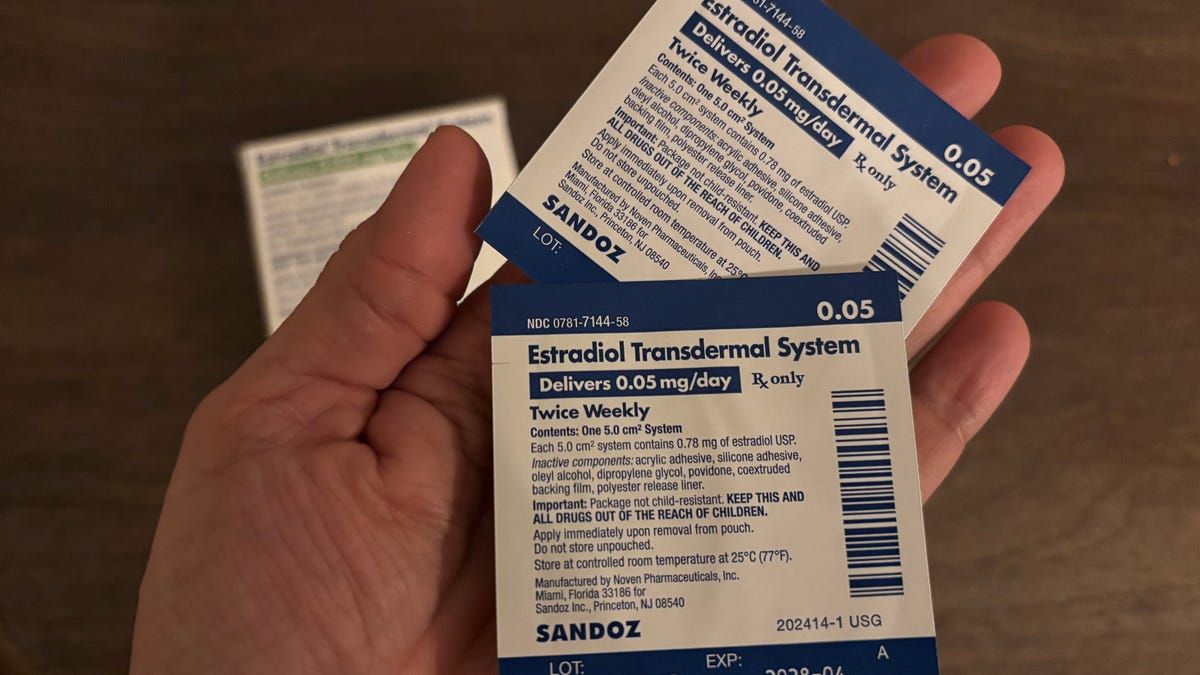
A shortage in estrogen patches because of manufacturing issues and some brand discontinuation has been exacerbated by an increase in prescriptions for estrogen since the Food and Drug Administration removed its black-box warning label last fall. The shortage has left women exhausted, frustrated and scrambling each month to call pharmacies for the medicine they need to treat their menopause symptoms.
Some women have switched from generic medication to available brand names, which costs them as much as $300 a month and are not covered by insurance. Others have been forced to use a different brand of estrogen each month, leading to inconsistent care. Women have driven 45 miles to pick up a coveted box of the tiny plastic patch they place near their belly button and change twice a week to help with their symptoms, from frozen shoulders to vaginal dryness.
Hormone replacement therapy − estrogen often coupled with progestin − is the preferred treatment for menopause, according to The Menopause Society. Estrogen helps protect against osteoporosis and can help with mood, memory and libido. It is also used by trans men and women as part of gender-affirming care.
“You do realize my whole family depends on me being on this estrogen patch,” Carrick, 55, jokingly told her pharmacist.
‘If Viagra were in shortage, we would be hearing about it’
Many women spend years suffering with perimenopause and menopause symptoms before they get help. One in 5 women go a year before a doctor diagnoses their menopause, according to a survey by the women’s health care company Bonafide. They might first be prescribed antidepressants instead of hormone replacement therapy.
“It was a long two- to three-year journey to even get HRT. And now it’s finally working for me, at a dose that works, and every month it’s a struggle to get my patch,” says Carrick, a marketing and communications director from the Sacramento, California, area. She orders her next prescription as soon as she’s eligible through insurance. Her pharmacist calls several locations to track it down.
Pharmacies blame manufacturing shortfalls. Several hormone replacement therapies have been on backorder by CVS for weeks, and pharmacists are checking other locations to help customers, says Roslyn Guarino, a CVS spokeswoman.
Sandoz, one of the larger manufacturers of estrogen patches, didn’t reply to messages from USA TODAY. But in January, Sandoz did inform the Australian Department of Health, Disability and Aging that Estradot, one of its popular patches, probably will face supply shortages until December 2026.
“I could make a bet that if Viagra were in shortage, we would be hearing about it,” said Abbie Schiller, a goal coach who lives in the Los Angeles area and struggles to fill her prescription to treat perimenopause each month.
Spending seven hours to track down estrogen patches
Last month, Schiller, 53, spent seven hours calling large pharmacy chains and small family pharmacies to get her next dose.
“It speaks to the resourcefulness of women that we carry the load that we do, that this has been added to that load, and we’ve just been getting it done month after month,” Schiller said. “A lot rides on this medication. We are the decision-makers for our home, our businesses, our parenting and our communities. They can’t pull this crutch out from under us.”
Women who can’t get their patch shouldn’t ration patches or go without them, doctors say.
Heather Hirsch, a physician and founder of The Collaborative, a concierge practice, suggests women try a different pharmacy, not just a different location. Some mail order programs haven’t seen the same shortage.
She suggests women call their provider to try another form of estrogen. She also recommends a daily gel, ring or spray. Hirsch says oral estrogen for menopause treatment still is possible for healthy women who aren’t at risk for blood clots.
“Don’t give up,” Hirsch says. “There are sometimes benefits to trying a different method,” including some women preferring the daily estrogen.
Alyssa Mastromonaco, 49, said that instead of a 90-day supply, her pharmacy would give her patches only in 30-day increments. Each time it was a different generic brand.
“My symptoms started to return. My gynecologist pointed out that generics can legally fluctuate in dose by about 20%, and when I looked back, I saw that one patch was minus 20% and another was about plus 15% from the patches I’d been using before the shortage,” says Mastromonaco, who cohosts the podcast Hysteria.
She switched to Alloy, a women’s telehealth company specializing in perimenopause and menopause that sources medication from several companies. She now gets her patch in 90-day increments.
“It was a little bit more money,” she said, “but worth it.”
Do you have a menopause story to tell? We want to hear from our readers.
Laura Trujillo is a national columnist focusing on health and wellness. She is the author of “Stepping Back from the Ledge: A Daughter’s Search for Truth and Renewal” and can be reached at [email protected].
link